
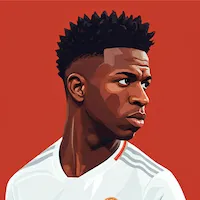
MBAPPE vs HAALAND vs VINICIUS
Comparing the definitive metrics of world football's current dominant icons.
Comparing the definitive metrics of world football's current dominant icons.


| MBAPPE | HAALAND | VINICIUS |
|---|---|---|
| 13 GOALS |
11 GOALS |
11 GOALS |
| 0.65 GOAL RATIO |
0.55 GOAL RATIO |
0.55 GOAL RATIO |
| 2 ASSISTS |
5 ASSISTS |
3 ASSISTS |
| 26 CHANCE CREATED |
16 CHANCE CREATED |
41 CHANCE CREATED |
| 34 SHOT ON TARGET |
27 SHOT ON TARGET |
29 SHOT ON TARGET |
| 3 BIG CHANCE CREATED |
4 BIG CHANCE CREATED |
4 BIG CHANCE CREATED |
| 34 DRIBBLES |
12 DRIBBLES |
44 DRIBBLES |
| MBAPPE | HAALAND | VINICIUS |
|---|---|---|
| 579 GAMES |
434 GAMES |
497 GAMES |
| 429 GOALS |
354 GOALS |
155 GOALS |
| 0.74 GOAL RATIO |
0.82 GOAL RATIO |
0.31 GOAL RATIO |
| 149 ASSISTS |
63 ASSISTS |
97 ASSISTS |
| MBAPPE | HAALAND | VINICIUS |
|---|---|---|
| 483 GAMES |
385 GAMES |
449 GAMES |
| 373 GOALS |
299 GOALS |
146 GOALS |
| 114 ASSISTS |
56 ASSISTS |
89 ASSISTS |
| MBAPPE | HAALAND | VINICIUS |
|---|---|---|
| 96 GAMES |
49 GAMES |
48 GAMES |
| 56 GOALS |
55 GOALS |
9 GOALS |
| 35 ASSISTS |
7 ASSISTS |
8 ASSISTS |
| MBAPPE | HAALAND | VINICIUS |
|---|---|---|
| 0 BALLON D’OR |
0 BALLON D’OR |
0 BALLON D’OR |
| 0 FIFA BEST |
0 FIFA BEST |
1 FIFA BEST |
| 5 FIFA FIFPRO WORLD XI |
4 FIFA FIFPRO WORLD XI |
2 FIFA FIFPRO WORLD XI |
| 0 UEFA BEST |
1 UEFA BEST |
0 UEFA BEST |
| 1 EUROPEAN GOLDEN BOOT |
1 EUROPEAN GOLDEN BOOT |
0 EUROPEAN GOLDEN BOOT |
| 0 UCL POTT |
0 UCL POTT |
1 UCL POTT |
| 0 UCL YOUNG POTT |
0 UCL YOUNG POTT |
1 UCL YOUNG POTT |
| 1 UCL TOP SCORER |
2 UCL TOP SCORER |
0 UCL TOP SCORER |
| 0 WC POTT |
0 WC POTT |
0 WC POTT |
| 1 WC YOUNG POTT |
0 WC YOUNG POTT |
0 WC YOUNG POTT |
| 0 COPA/EURO POTT |
0 COPA/EURO POTT |
0 COPA/EURO POTT |
| 0 COPA/EURO YOUNG POTT |
0 COPA/EURO YOUNG POTT |
0 COPA/EURO YOUNG POTT |
| 0 COPA/EURO TOP SCORER |
0 COPA/EURO TOP SCORER |
0 COPA/EURO TOP SCORER |
| 5 LEAGUE POTT |
3 LEAGUE POTT |
0 LEAGUE POTT |
| 3 LEAGUE YOUNG POTT |
1 LEAGUE YOUNG POTT |
0 LEAGUE YOUNG POTT |
| 7 LEAGUE GOLDEN BOOT |
2 LEAGUE GOLDEN BOOT |
0 LEAGUE GOLDEN BOOT |
| MBAPPE | HAALAND | VINICIUS |
|---|---|---|
| 48 GAMES |
58 GAMES |
59 GAMES |
| 48 GOALS |
51 GOALS |
24 GOALS |
| 8 ASSIST |
11 ASSIST |
13 ASSIST |
| 108 CHANCES CREATED |
38 CHANCES CREATED |
110 CHANCES CREATED |
| 16 BIG CHANCES CREATED |
14 BIG CHANCES CREATED |
17 BIG CHANCES CREATED |
| 109 SHOT ON TARGET |
104 SHOT ON TARGET |
76 SHOT ON TARGET |
| 114 DRIBBLES |
24 DRIBBLES |
137 DRIBBLES |
| MBAPPE | HAALAND | VINICIUS |
|---|---|---|
| 42 GAMES |
52 GAMES |
52 GAMES |
| 42 GOALS |
38 GOALS |
22 GOALS |
| 5 ASSISTS |
9 ASSISTS |
10 ASSISTS |
| MBAPPE | HAALAND | VINICIUS |
|---|---|---|
| 6 GAMES |
6 GAMES |
7 GAMES |
| 6 GOALS |
13 GOALS |
2 GOALS |
| 3 ASSISTS |
2 ASSISTS |
3 ASSISTS |
| 12 CHANCES CREATED |
4 CHANCES CREATED |
15 CHANCES CREATED |
| 3 BIG CHANCES CREATED |
3 BIG CHANCES CREATED |
2 BIG CHANCES CREATED |
| 13 SHOT ON TARGET |
18 SHOT ON TARGET |
5 SHOT ON TARGET |
| 15 DRIBBLES |
3 DRIBBLES |
14 DRIBBLES |
| MBAPPE | HAALAND | VINICIUS |
|---|---|---|
| 28 GAMES |
35 GAMES |
34 GAMES |
| 25 GOALS |
27 GOALS |
15 GOALS |
| 4 ASSISTS |
8 ASSISTS |
5 ASSISTS |
| 60 CHANCES CREATED |
24 CHANCES CREATED |
65 CHANCES CREATED |
| 7 BIG CHANCES CREATED |
9 BIG CHANCES CREATED |
7 BIG CHANCES CREATED |
| 61 SHOT ON TARGET |
59 SHOT ON TARGET |
44 SHOT ON TARGET |
| 75 DRIBBLES |
18 DRIBBLES |
85 DRIBBLES |
| MBAPPE | HAALAND | VINICIUS |
|---|---|---|
| 11 GAMES |
10 GAMES |
14 GAMES |
| 15 GOALS |
8 GOALS |
5 GOALS |
| 1 ASSISTS |
0 ASSISTS |
5 ASSISTS |
| 31 CHANCES CREATED |
4 CHANCES CREATED |
24 CHANCES CREATED |
| 5 BIG CHANCES CREATED |
2 BIG CHANCES CREATED |
8 BIG CHANCES CREATED |
| 30 SHOT ON TARGET |
20 SHOT ON TARGET |
20 SHOT ON TARGET |
| 19 DRIBBLES |
1 DRIBBLES |
27 DRIBBLES |
| MBAPPE | HAALAND | VINICIUS |
|---|---|---|
| 1 GAMES |
2 GAMES |
1 GAMES |
| 0 GOALS |
0 GOALS |
1 GOALS |
| 0 ASSISTS |
1 ASSISTS |
0 ASSISTS |
| 1 CHANCES CREATED |
1 CHANCES CREATED |
0 CHANCES CREATED |
| 1 BIG CHANCES CREATED |
0 BIG CHANCES CREATED |
0 BIG CHANCES CREATED |
| 0 SHOT ON TARGET |
1 SHOT ON TARGET |
4 SHOT ON TARGET |
| 2 DRIBBLES |
1 DRIBBLES |
4 DRIBBLES |
 2019
2019
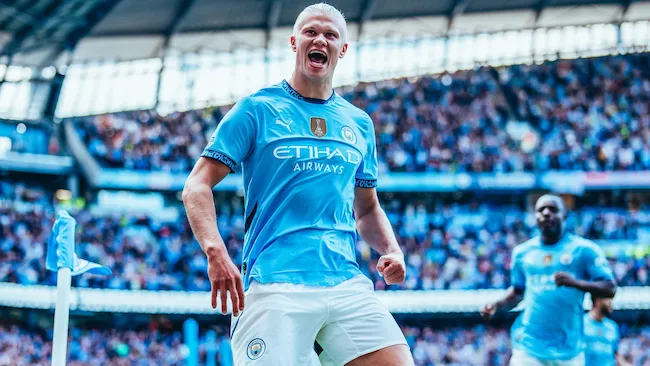
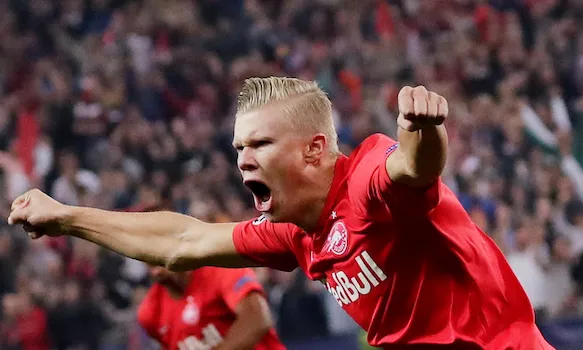
On September 17, 2019, the then 19-year-old Norwegian striker announced himself as a new force in European football with a stunning first-half hat-trick for Red Bull Salzburg against K.R.C. Genk.
 2022
2022
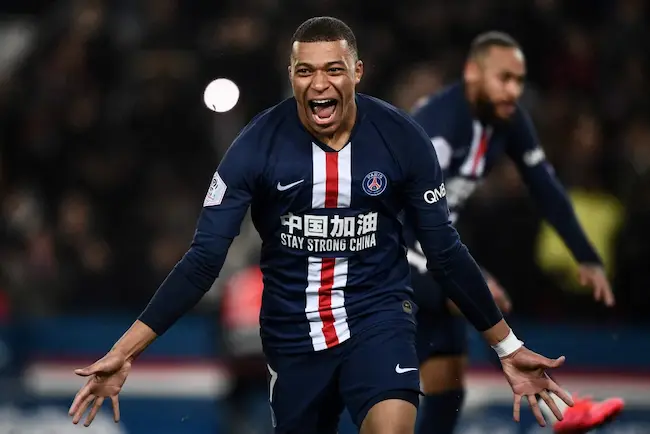
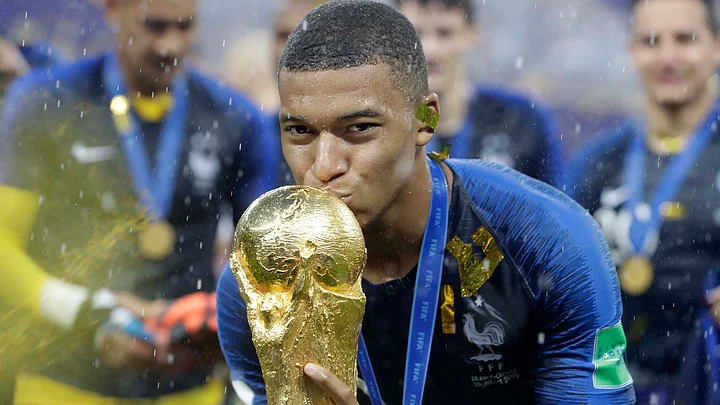
Kylian Mbappé announced himself on the world stage at the 2018 World Cup, scoring four goals for France and winning the Best Young Player award at just 19.
 2024
2024
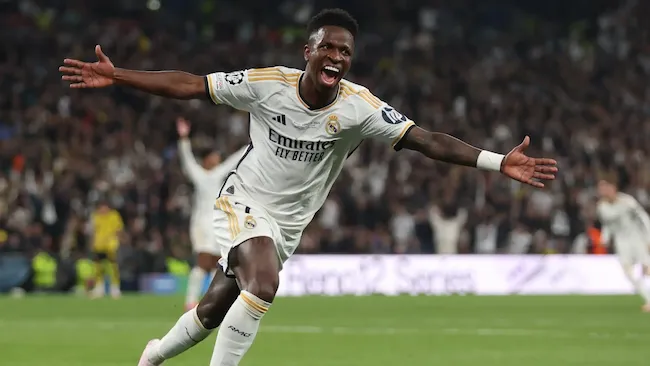
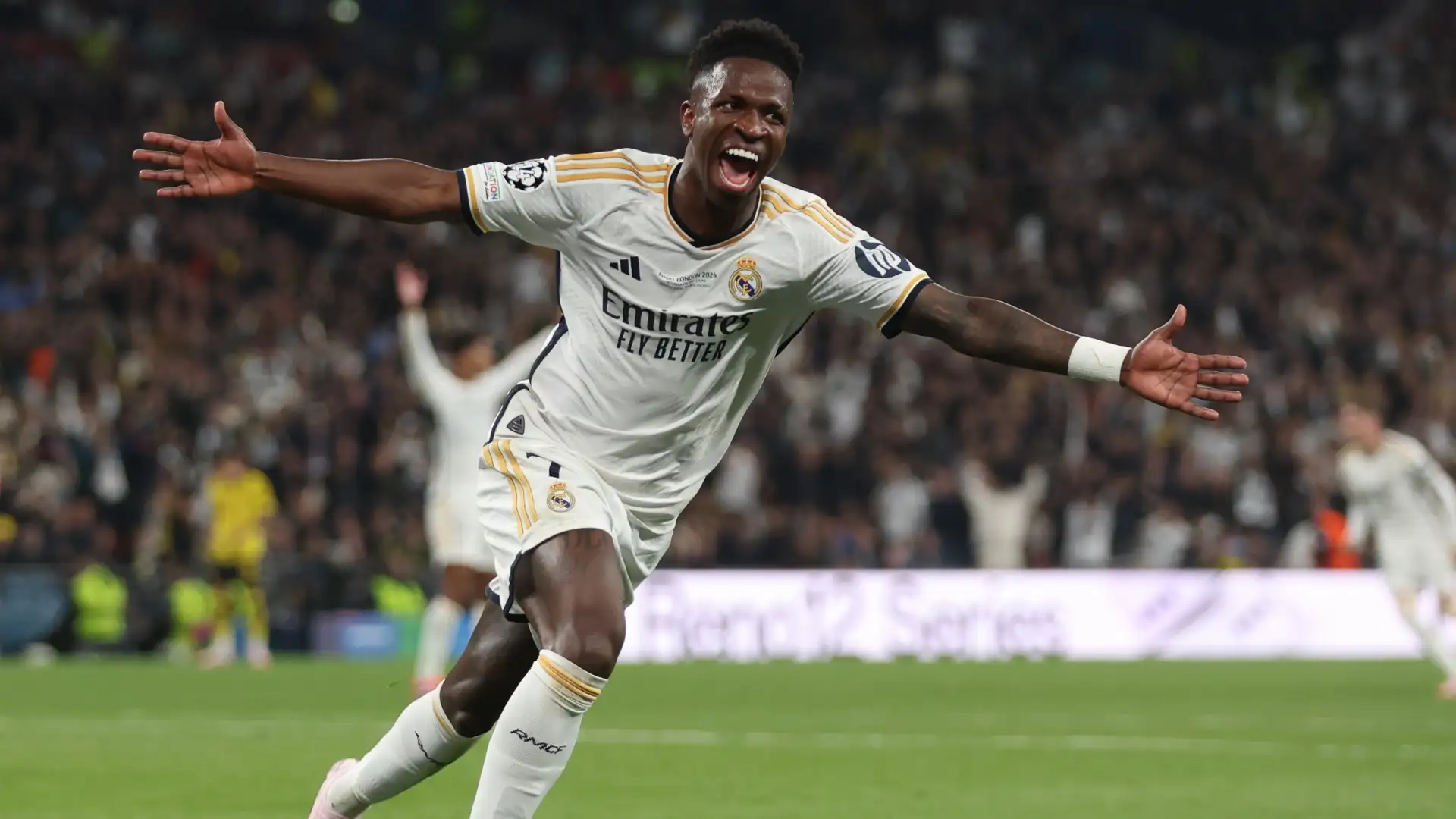
Vinícius Júnior led Real Madrid to their 15th Champions League title with electrifying performances and clutch goals, earning UEFA Player of the Season.
 2016
2016
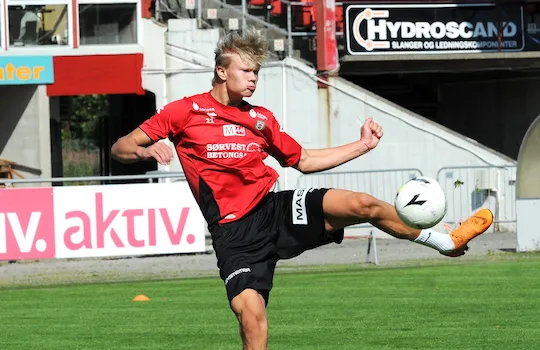
Long before Erling Haaland became the global phenomenon smashing Premier League and Champions League records, his professional career quietly began in the modest surroundings of his hometown club in Norway.
 2022
2022
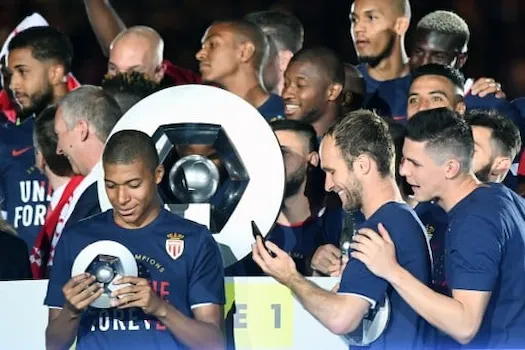
Mbappé's 2016-17 season marked his meteoric rise, helping AS Monaco win Ligue 1 and reach the Champions League semi-finals.
 2017
2017
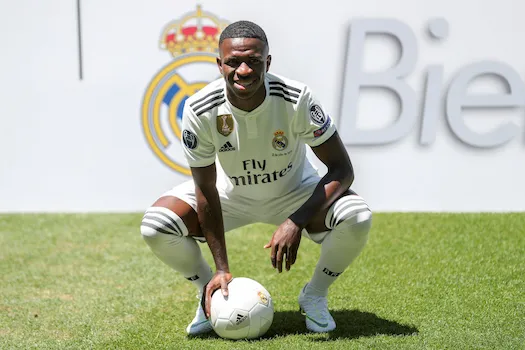
In 2017, the football world was stunned when Real Madrid agreed to pay €46 million for a 16-year-old who had barely played professional football. That teenager was Vinícius Júnior, a rising star from Flamengo’s academy in Brazil. This transfer became one of the most expensive deals for a minor in football history—many questioned whether Real Madrid had overpaid for potential rather than proven performance. However, this move would later be remembered as one of the most strategic deals in modern football
 2022
2022
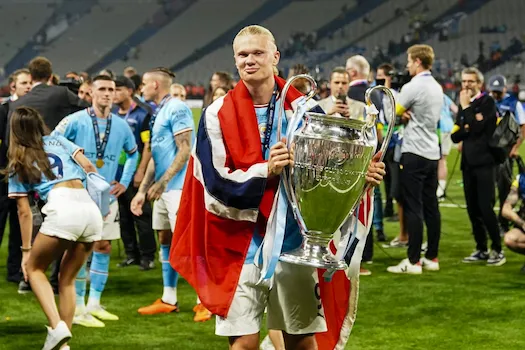
The Norwegian striker delivered a debut season for the ages, culminating in a historic treble: the Premier League, the FA Cup, and the Champions League.
 2022
2022
In a monumental achievement that broke a 90-year-old record, striker Erling Haaland became Norway's all-time leading goalscorer for the men's national team in 2024.
Kylian Mbappé, Erling Haaland, and Vinícius Júnior are three of the defining attackers of this generation. Their careers have overlapped, and all three have produced elite numbers at club and international level. Each offers a different type of attacking impact, from pure goal scoring to creativity and all-round play. But who is the best overall?
We compare them across a number of key attacking categories, using all-time data, and leave the final judgment to you.
What really defines this comparison is the contrast in goal scoring efficiency and volume across different roles. While all three players score in different ways, their all-time numbers show clear patterns rather than constant back-and-forth dominance.
Across their careers, Erling Haaland holds the strongest scoring rate, with 354 goals in 434 games, giving him a 0.82 goals-per-game ratio. Kylian Mbappé follows with 429 goals in 579 games, resulting in a 0.74 goals-per-game ratio, while Vinícius Júnior is well behind, scoring 155 goals in 497 games (0.31 ratio).
At club level, the pattern remains similar. Haaland has scored 299 goals in 385 games (0.78 per game), while Mbappé has 373 goals in 483 games (0.77 per game). Vinícius again trails with 146 goals in 449 games (0.33 per game). The gap between Haaland and Mbappé is narrow, with both producing elite-level scoring across multiple seasons, while Vinícius’ output reflects a more creative role rather than a goal-focused one.
International football further separates the profiles. Haaland’s 55 goals in 49 games (1.15 goals per game) stands out clearly, while Mbappé’s 56 goals in 96 games (0.58 goals per game) remains strong and consistent at the highest level. Vinícius’ national team output is much lower, with 9 goals in 48 games (0.18 goals per game), reinforcing that goal scoring has not been his primary contribution.
Role evolution also matters when judging these numbers. Vinícius spent much of his early career as a touchline winger, only recently moving closer to goal. Mbappé began wide before transitioning into a more central attacking role, while Haaland has been a striker from the start, allowing him to focus almost entirely on finishing. If these differing roles and career paths are taken into account, the gap between Mbappé and Haaland remains tight, while Vinícius’ lower totals become more understandable.
Among all categories, goal scoring is clearly led by Haaland, closely followed by Mbappé, with Vinícius positioned well behind due to role and output rather than ability.
Assists reveal which players consistently create goals rather than finish them, and the all-time numbers show a clear hierarchy when viewed across totals, rates, and elite competitions.
Across their careers, Kylian Mbappé leads in total assists, recording 149 assists in 579 games (0.26 assists per game). At club level, he produced 114 assists in 483 matches, while at international level he added 35 assists, showing that his creative output translates across competitions. While scoring remains his primary strength, these numbers confirm that playmaking has been a consistent secondary part of his game.
Vinícius Júnior stands out when assist contribution is measured relative to role. He registered 97 assists in 497 games (0.20 assists per game), with 89 assists coming at club level. Assists make up a large share of his overall attacking output, reflecting his responsibility in ball progression, chance creation, and final passes rather than pure finishing. His national team assists remain low (8 in 48 games), but this is offset by strong club and European output.
Erling Haaland ranks clearly behind in creative metrics. With 63 assists in 434 games (0.14 assists per game), most of his assists come incidentally from finishing actions rather than structured creation. His club assists (56 in 385 games) and limited national output (7 assists) underline that chance creation is not a core part of his role.
The Champions League data sharpens the contrast further. Using UEFA-recognised non-Opta assists, Vinícius leads with 26 assists in 82 matches, showing elite creative influence at the highest level. Mbappé follows with 24 assists in 98 matches, maintaining steady contribution alongside scoring. Haaland trails far behind with 5 assists in 58 matches, reinforcing his focus on finishing rather than creation.
Role and playing style explain the assist gap. Vinícius has played mainly as a wide creator, Mbappé shifted from winger to a more central role, and Haaland has always been a finisher. As a result, assists are led by Vinícius, followed by Mbappé, with Haaland well behind due to role rather than ability.
When it comes to overall chance creation, the numbers show a clear difference in creative involvement between the three. (All chance-creation data below reflects recorded and available matches only, as some early cup fixtures do not have complete tracking data.)
Across their careers, Kylian Mbappé has created 829 chances in 579 games (1.44 per game), the highest among the three. He also produced 227 big chances (0.40 per game), showing that he not only creates frequently but also generates high-quality opportunities.
Vinícius Júnior follows closely with 658 chances in 497 games (1.29 per game), along with 136 big chances created (0.28 per game). While his total volume is lower than Mbappé’s, his role as a wide creator explains his strong numbers, particularly in buildup phases.
Erling Haaland trails significantly, creating 313 chances in 434 games (0.73 per game), with 93 big chances created (0.22 per game). His lower numbers reflect his role as a central finisher rather than a creative hub.
In the Champions League, the separation becomes sharper. Vinícius has created 160 chances in 98 matches (1.81 per game), an elite rate and the highest of the three. Mbappé follows with 48 big chances (1.52 per game), while Haaland again records 41 chances per game, mirroring his overall rate.
When looking at assist efficiency, Haaland converts 19% of his chances into assists, Mbappé 18%, and Vinícius 15%. This shows that while Haaland creates less, his final passes are often decisive, whereas Mbappé and Vinícius operate at higher volume. Overall, playmaking is led by Mbappé in total volume, Vinícius in elite European creativity, and Haaland ranks clearly behind, as his primary function is finishing rather than creation.
The shooting numbers show a clear contrast in style and efficiency between the three. In terms of volume, Kylian Mbappé leads with 996 shots on target in 579 games (1.73 per game), compared to Erling Haaland with 692 in 434 games (1.61 per game), and Vinícius Júnior with 464 in 497 games (0.90 per game) (all figures based on recorded and available match data).
However, when it comes to efficiency, Haaland leads clearly. He converts 51.3% of his shots on target into goals ( 354 goals from 692), compared to Mbappé’s 43.5% (429 from 996) and Vinícius’ 32.7% (155 from 464). This highlights Haaland’s ability to turn accurate attempts into goals at a higher rate.
Despite Haaland’s superior efficiency, his role as a central striker explains much of that advantage. He operates mainly inside the box and rarely takes low-percentage shots from distance, which naturally boosts his conversion rate. Mbappé, by contrast, attempts more shots from wider and longer-range positions, increasing his volume but slightly lowering efficiency. Vinícius, as a natural winger, is less focused on shooting volume altogether.
Dribbling ability is closely linked to role and playing style. Kylian Mbappé began his career as a wide attacker, relying heavily on pace and direct runs at defenders. Although he has gradually moved into a more central role, dribbling remains a major part of his game, especially in transition situations.
Vinícius Júnior has spent most of his career as a traditional winger, staying wide and frequently isolating defenders in one-v-one situations. Because of this, dribbling continues to be one of his primary tools in attack.
Erling Haaland, on the other hand, has operated almost exclusively as a central striker. His game is built around movement inside the box and finishing rather than taking on defenders repeatedly. The numbers reflect these roles.
Mbappé has completed 1308 successful dribbles in 579 games (2.28 per game), the highest total and rate among the three. Vinícius follows with 1025 successful dribbles in 497 games (2.06 per game), also maintaining strong volume. Haaland is far behind, with 234 successful dribbles in 434 games (0.54 per game).
There is little doubt in this category. Dribbling is clearly strongest with Mbappé, closely followed by Vinícius, while Haaland’s lower numbers reflect positional role rather than technical weakness.
(For clarity, hat tricks here are counted as three or more goals in a single game, as some sources only include exactly three.) The overall numbers show that Erling Haaland leads in total hat tricks, with 28 in 434 games, averaging one every 15.4 games. Close behind is Kylian Mbappé, who has recorded 24 hat tricks in 579 games, one every 23.5 games. Vinícius Júnior has 4 hat tricks in 497 games, averaging one every 118.5 games.
When looking at non-penalty hat tricks, the gap narrows slightly. Haaland has 20 non-penalty hat tricks, while Mbappé has 19, showing that most of their multi-goal performances come from open play rather than spot kicks. Vinícius’ 4 hat tricks are all non-penalty.
League data shows Haaland ahead again, with 15 league hat tricks, compared to Mbappé’s 11 and Vinícius’ 2. In the Champions League, however, Mbappé leads with 5 hat tricks, ahead of Haaland’s 2 and Vinícius’s 1. At international level, Haaland dominates with 6 hat tricks, while Mbappé has 3, and Vinícius has 0.
Role context matters here. Haaland operates as a central striker and primary penalty taker, which increases his chances of scoring three or more in dominant performances. Mbappé’s hat tricks are spread across competitions, including stronger European opposition. Vinícius, as a wide attacker and secondary scorer, naturally records fewer multi-goal matches.
Free kicks are a specialized role, and unlike other categories, none of these three players are regular primary takers for club or country, which already limits the sample size.
In terms of direct free-kick goals, Kylian Mbappé has scored 1 in top-level senior competition, while Vinícius Júnior has 2, both coming during his stint with Real Madrid Castilla in Spain’s fourth professional division rather than La Liga or international matches. Erling Haaland has 0 direct free-kick goals in senior competition.
Even though Vinícius technically leads in total, his goals came outside the top tier, Mbappé’s came at the highest level, and Haaland has rarely taken free kicks, as these were usually handled by specialists. At Manchester City, they were mainly taken by players like Kevin De Bruyne and Phil Foden. The low numbers across all three players reflect their roles rather than any lack of ability.
Overall, There is no "dominant" taker in this group. Vinícius holds the highest volume (technically), while Mbappé has the highest-level conversion. Haaland remains an outlier, opting to be the target of the set-piece rather than the executor.
It is difficult to compare international careers when players represent teams at different competitive levels. Kylian Mbappé and Vinícius Júnior play for World Cup regulars with deep squads and constant exposure to major tournaments, while Erling Haaland represents Norway, a strong but lower-ranked side with fewer appearances on the biggest stages. This gap affects opportunities, opposition level, team quality, and overall output.
Even so, the numbers still highlight clear differences. Mbappé and Haaland are almost level on total goals, with Mbappé on 56 goals in 96 matches and Haaland on 55 goals in 49 matches, giving Haaland a far superior scoring rate. However, Mbappé compensates with overall involvement, providing 59 assists compared to Haaland’s 7. Vinícius has 9 goals and 8 assists in 48 matches, a solid return but still below the other two at this stage.
When we look at their notable moments and achievements with the national team, Mbappé stands in a league of his own as a 2018 World Cup winner, finishing that tournament with 4 goals; he followed this by leading France to another final in 2022, winning the Golden Boot with 8 goals and reaching 12 World Cup goals in just 14 matches. Haaland, despite limited tournament exposure, played a decisive role in Norway’s promotion to Nations League A in 2025 with 7 goals in 6 matches and led their 2026 World Cup qualification campaign with 16 goals and 2 assists in 8 matches, averaging 2.25 goals per game. While Vinícius has been a regular part of Brazil’s major tournament squads, he recorded 1 goal and 2 assists at the 2022 World Cup and 2 goals in the most recent Copa América.
Overall, Mbappé and Haaland currently lead in measurable international output, each standing out as the key performer for their national teams. while Vinícius already a world-class player, has not yet matched their statistical impact at international level,he continues to grow into a larger role for Brazil with steady but less dominant impact so far.
All three players have established themselves as elite performers at club level, though their impact is expressed in distinct statistical profiles rather than identical roles.
Kylian Mbappé remains the standard-bearer for sustained offensive volume. Having burst onto the scene with Monaco's miraculous 2017 Champions League run, he has maintained a decade of world-class output Mbappé has surpassed 373 club goals and contributed over 114 assists in roughly 483 club appearances. His impact is defined by a rare "dual-threat" profile—he is as much a playmaker as he is a finisher. His move to Real Madrid for the 2024/25 season silenced critics who questioned his ability outside of France; he secured the Pichichi Trophy in his debut campaign with 31 goals and followed it up with a blistering start to the 2025/26 season, reaching 23 goals by February. With seven league titles and a European Golden Boot to his name, Mbappé’s club career is a monument to consistent, high-ceiling production across multiple seasons.
In contrast, Erling Haaland has redefined the limits of scoring efficiency. While he has fewer total appearances than Mbappé, his strike rate is unprecedented. Haaland has amassed over 299 club goals in just 385 appearances, including an absurd 105 goals in his first 120 Premier League games.
Haaland’s greatness is most visible in the UEFA Champions League, where he maintains a ratio of over 0.78 goals per game— the highest in the history of the competition. His "Triple Crown" 2022/23 season with Manchester City remains his crowning achievement, where he broke the Premier League single-season scoring record (36 goals) and secured the Treble. Haaland does not seek the ball in build-up play like his peers; instead, he exists to conclude the move, a role that has earned him multiple Premier League Golden Boots and the reputation of a "cheat code" in elite football.
Vinícius Júnior represents a different archetype: the clutch, high-impact transitional attacker. Though his raw scoring totals—roughly 146 goals and 89 assists in 449 matches— may seem lower than the others, his influence is measured in "silverware moments." Vinícius has mastered the art of the Champions League final, scoring the winning goals in both the 2022 and 2024 finals. His evolution from a raw dribbler at Flamengo to the 2024 FIFA "The Best" winner highlights a player who thrives under the highest pressure. In the 2025/26 season, he continues to lead Real Madrid’s creative metrics, often serving as the engine for Mbappé’s goals. With two Champions League trophies and three La Liga titles, Vinícius’s career is defined not by the quantity of his goals, but by their weight and timing.
Ultimately,no single player dominates every category. However, in terms of goal contribution and consistency, Mbappé stands out with sustained output across more seasons and matches, having entered top-level club football earlier. Haaland, meanwhile, excels in scoring efficiency, operating at close to a 0.8 goals-per-game ratio across his club career.